
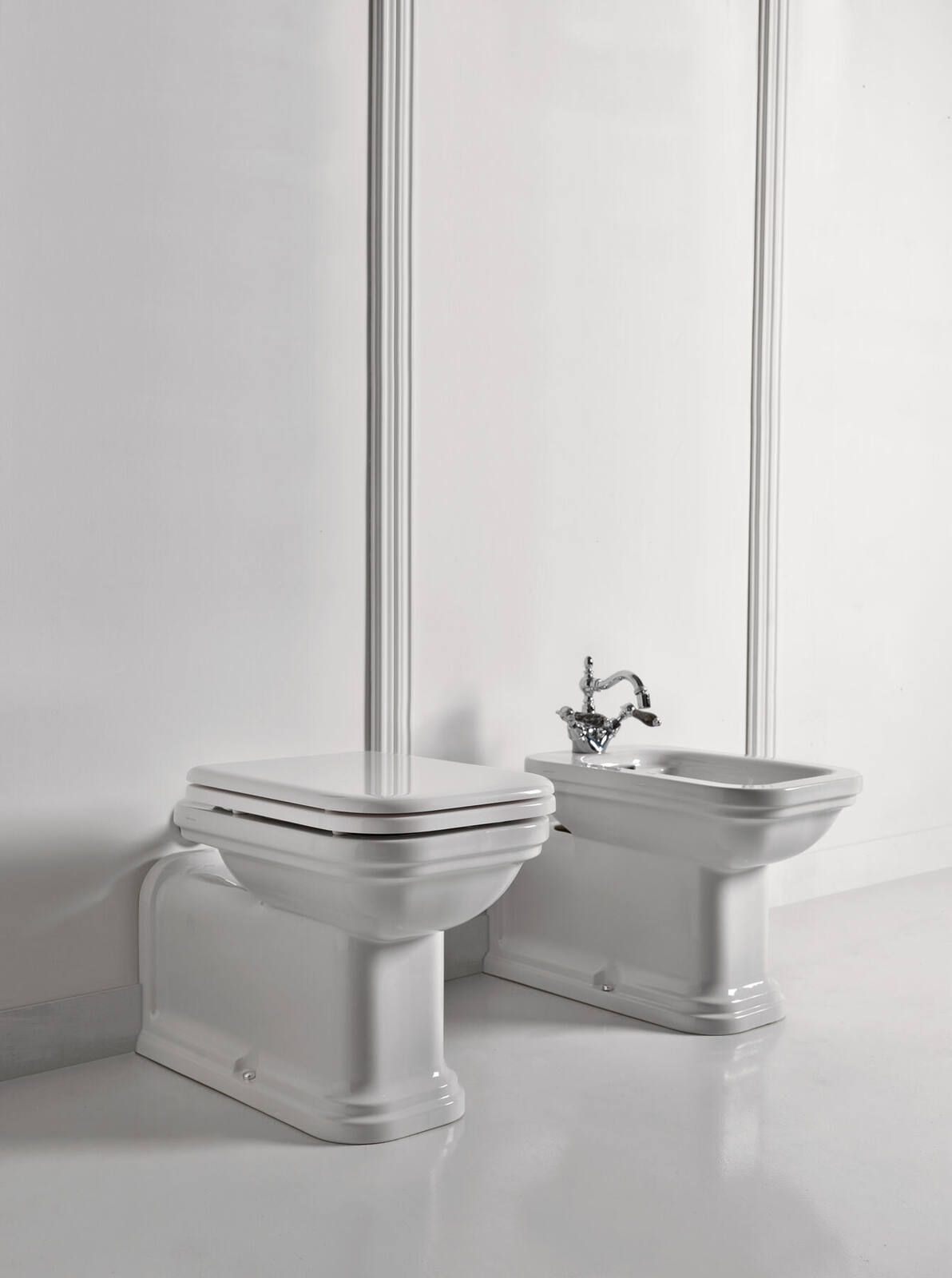
Chrome is the hardest-wearing and easiest bathroom tap finish to live with; gold and bronze give a warmer, softer look but need gentler cleaning; matt black hides water spots but shows scratches and limescale more than people expect. Whichever you choose, the finish is a coating over a brass body, and how long it lasts depends far more on cleaning products and water hardness than on the colour. This guide covers how each finish behaves, how to keep taps, wastes, flush pipes and rails matching across a room, and the two practical questions that catch people out: hard water and low water pressure.
How each brassware finish looks and wears
Polished chrome
Chrome is electroplated over a nickel layer on the brass. It is hard, it reflects light strongly and it tolerates daily cleaning better than any other finish. Its weakness is that it shows everything: water spots, fingerprints and the white film left by hard water all sit on a mirror surface. In a family bathroom that is wiped down regularly it stays bright for many years. Chrome also suits both period and contemporary rooms, which is why most basin and bath fittings are offered in it first.
Gold
Gold finishes range from bright polished gold to brushed or satin tones that read closer to old brass. They work well against white ceramics, painted joinery and marble, and they suit grand-hotel rooms such as our Thornham collection, where fittings come in chrome, gold and bronze. The colour can vary slightly between production batches and between makers, so a room should be ordered together where possible. Gold is softer to the eye than chrome and needs a softer cloth.
Bronze
Bronze finishes are dark and warm, with a brown or near-black depth that changes under different light. They sit well with oak, walnut, dark green paint and stone floors. Before ordering, ask whether the bronze is sealed or a living finish designed to change with handling, because the two need different care. A sealed finish keeps its colour for years if it is cleaned gently. A living finish will darken where hands touch it, which some clients want and others do not.
Matt black
Matt black hides water spots better than chrome, and it gives a strong outline in a pale room. It does not hide limescale: on a dark matt surface, scale shows as a pale bloom, especially around the spout and aerator. Matt coatings also mark if scrubbed or wiped with a cloth that has picked up grit. Treat it as a finish that needs a light, regular wipe rather than an occasional hard clean.
Matching finishes across taps, wastes, flush pipes and rails
A common fault in finished bathrooms is not a poor finish but three slightly different golds in one room. Taps come from one range, the basin waste from another, the towel rail from a third, and under a bathroom light the differences are obvious. Polished chrome is forgiving. Gold, bronze and black are not.
Make a list of every visible metal item before ordering anything. In a typical room that includes basin and bath taps, the shower valve and head, basin and bath wastes, any exposed bottle trap, the flush plate or lever, the flush pipe on a high- or low-level cistern, the toilet roll holder, robe hooks, the towel rail, mirror fixings, washstand legs and cabinet handles. Then order the finished metalwork from as few ranges as possible, and at the same time. Our fittings and wastes are listed by finish so the small parts can be matched to the taps.
Mixing finishes deliberately can work, for example chrome taps with a bronze washstand, provided the contrast is obvious and repeated. Two finishes that are nearly the same always look like a mistake.
Cleaning products to avoid on bathroom taps
Most damage to tap finishes comes from cleaning with the wrong product. The coatings on taps are thin, and most bathroom cleaners are formulated for ceramics and glass, which are far harder.
- Limescale removers and descalers containing acids, including the ones sold specifically for showers.
- Bleach, chlorine-based sprays and toilet cleaners, which can splash onto nearby fittings.
- Cream cleaners, scouring powders and the green side of a kitchen sponge.
- Vinegar and lemon-based home remedies on gold, bronze or matt black.
- Metal polishes on anything that is lacquered or coated.
Warm water, a little mild washing-up liquid and a soft microfibre cloth will deal with day-to-day marks on every finish. Rinse and dry afterwards. Drying is the step most people skip, and it is the one that prevents scale building up. Our care guide covers each finish in more detail.
Brassware in hard water areas
Suffolk and London are both hard water areas, so limescale is part of daily life in most of the houses we supply. Hard water leaves calcium deposits wherever it dries: on the spout, around the base of the tap, on shower heads and inside aerators. On chrome the deposit looks like a white haze; on matt black and bronze it shows as a chalky patch that can be mistaken for damage to the finish.
The practical answer is to stop the deposit forming rather than removing it later. Dry taps after use, especially in a guest bathroom where water may sit for days. Choose shower heads with flexible rubber nozzles that can be rubbed clear by hand. Unscrew and soak aerators in warm water when the flow becomes uneven. If a property has a water softener, check with the installer that the basin cold tap or kitchen drinking-water tap is still fed with unsoftened water where that is wanted. A softener reduces scale on fittings considerably, but it does not remove the need to dry and wipe.
Water pressure and low-pressure systems
Every tap and shower valve has a minimum working pressure, and many contemporary mixers and thermostatic showers are designed for mains-pressure systems. Older houses, and many country houses, still run on gravity-fed hot water from a cylinder with a cold tank in the loft. On a low-pressure gravity system, a tap designed for high pressure may give a weak or uneven flow, and a thermostatic shower may not work at all.
Before choosing brassware, find out what system the house has: combination boiler, unvented cylinder, gravity-fed cylinder, or a mix. Then check the minimum working pressure on the specification sheet for each tap and valve against what the system delivers. Balanced pressure matters too. A mixer fed with mains-pressure cold and gravity hot will deliver unevenly unless it is designed for that or the supply is balanced. Where pressure is low, the options include taps rated for low pressure, a pump, or a change of hot water system, and each has consequences for noise, space and cost that are better settled early.
Our design service checks supply type and pipe runs before brassware is scheduled. If you are choosing taps yourself, ask your plumber to measure the static and running pressure at the bathroom before you order, and keep that figure with your shortlist.